'Glissandos and Soothsayers' show translates scientific research through art
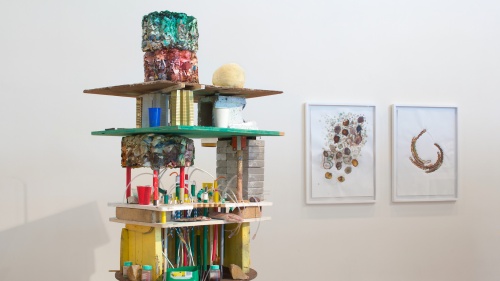
What traces do humans leave behind them on the environment and other organisms, how can artists translate and advocate for scientific research, and how might biological processes inspire printmaking methods?
These are just a few of the questions addressed by artist and educator Terry James Conrad’s upcoming “Glissandos and Soothsayers” exhibition, which runs Tuesday, Oct. 6 through Monday, Nov. 16, at Concordia College’s Cyrus M. Running Gallery.
A public reception is set for 4 to 5:30 p.m. Tuesday, Oct. 6, with artist’s remarks at 4:30 p.m.
Conrad’s work often references the idea of a biomarker, or a foreign trace on a body, organism, or landscape. The exhibition at Concordia will revolve around printmaking themes but delve into sculpture, performance, and musical instrument building.
“In most of my projects I have been presenting both the print as well as the tools used to make the prints,” Conrad writes. “For instance, tools or ‘sculptural presses’ are engineered objects built from found materials collected in the environment. All the inks involved are also made from found materials.”
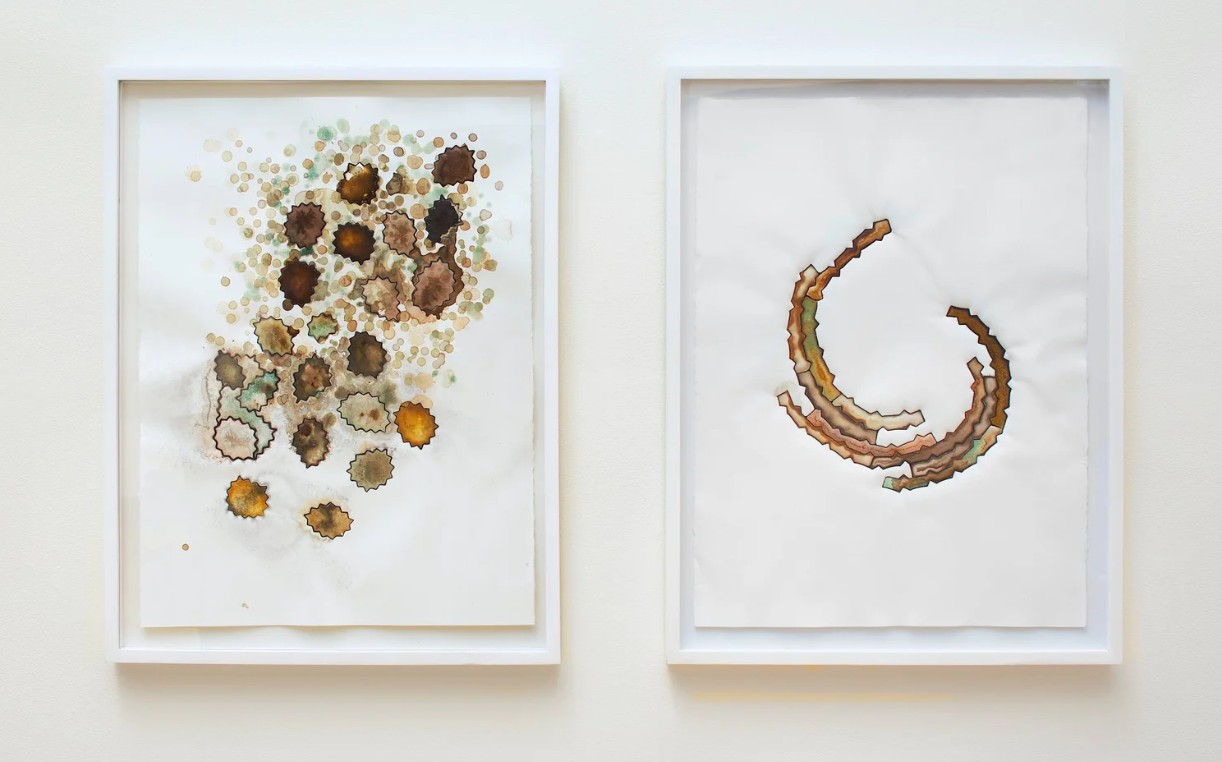
His work spans printmaking, tool making, and sound, often emerging through interdisciplinary collaborations. He is currently developing a body of work — prints, instruments, and tools — in partnership with oceanographers Dr. Joan Bernhard and Dr. Catherine Davis, supported by a National Science Foundation award. This project draws on his experience shadowing scientific teams on Pacific Ocean expeditions.
“An interest for this collaboration stems from the current divide in our society between the scientific community and portions of the broader public,” Conrad writes, describing the general public distrust experienced by the scientists who discovered microorganisms in the 17th century. “The truth was often inconvenient to the prevailing norms. This sentiment is at the heart of my current interest in making art; to be an advocate and translator of scientific research. We unfortunately still live in a world where experts are not trusted, and science is often seen as inconvenient.
“My hope is that my work with Dr. Bernhard and Dr. Davis, the art that arises from it, and the public outreach I have done through lectures and exhibitions will help deepen the public’s understanding of the scientific process and restore trust in the voices of these experts.”
Conrad currently serves as the area head of printmaking and Iowa Print Media associate professor at the University of Iowa, where he is also the liaison to Frogman’s Print Workshops. Originally from New York state, he earned his Bachelor of Fine Arts from Alfred University and his Master of Fine Arts from Cranbrook Academy of Art. He co-founded Round Lake School — a preschool and artist residency in upstate New York.
The Cyrus M. Running Gallery is free and open to the public from 9 a.m. to 4:30 p.m. Monday through Friday and 1 to 4 p.m. Sundays. It will be closed during the fall interim from Oct. 19-23.
More
- Upcoming shows at the Cyrus M. Running Gallery
- Study Art at Concordia
- Study Biology | Environmental and Sustainability Studies at Concordia
- Terry James Conrad
- The National Science Foundation