Preparing for practice: Social work students train through client simulations
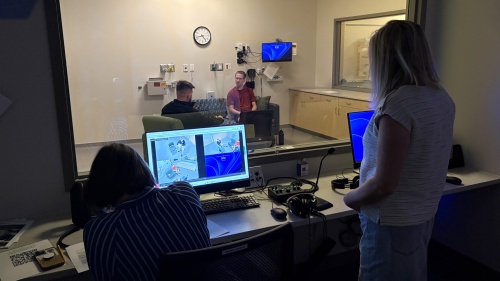
Behind a closed door, a difficult conversation is unfolding.
A client shares concerns, emotions, and pieces of a complicated personal history. Across from them sits a social work student listening closely, building rapport, and identifying issues.
The stakes feel real, and that's the point.
Students in Concordia College's Master of Social Work program recently participated in a clinical simulation designed to prepare them for work with future clients. Trained actors portrayed clients in realistic scenarios while faculty members and facilitators observed from behind one-way glass, evaluating each interaction and offering feedback to help students refine their practice.
"I think you learn a lot from a textbook, but it doesn't always get you there,” said Erika Rand '26, a student in the program's accelerated track. “You really learn when you do it live. When you're working with an actor, it's way more real.”
“Students need opportunities to practice these skills before they're working with real clients. Simulation gives them a safe place to think through challenging situations, receive feedback, and learn from mistakes while they're still developing their clinical judgment.”
The sessions were recorded, too, giving students an opportunity to review their performances, recognize what they missed, and consider how they might respond differently in the future, all in a low-stakes setting.
“It's the perfect time to mess up,” Rand said. Watching the recording helps students identify things they didn't pick up on in the moment, particularly when nerves make it difficult to focus on everything a client is communicating.
Jake Koskela '26, another student in the accelerated program, said repeated simulations have helped him build confidence before entering the field.
“Nothing is going to prepare me 100%,” he said, “but this is going to give me a good structure and a general idea of what to expect. You're not going to walk into that first assessment blind.”
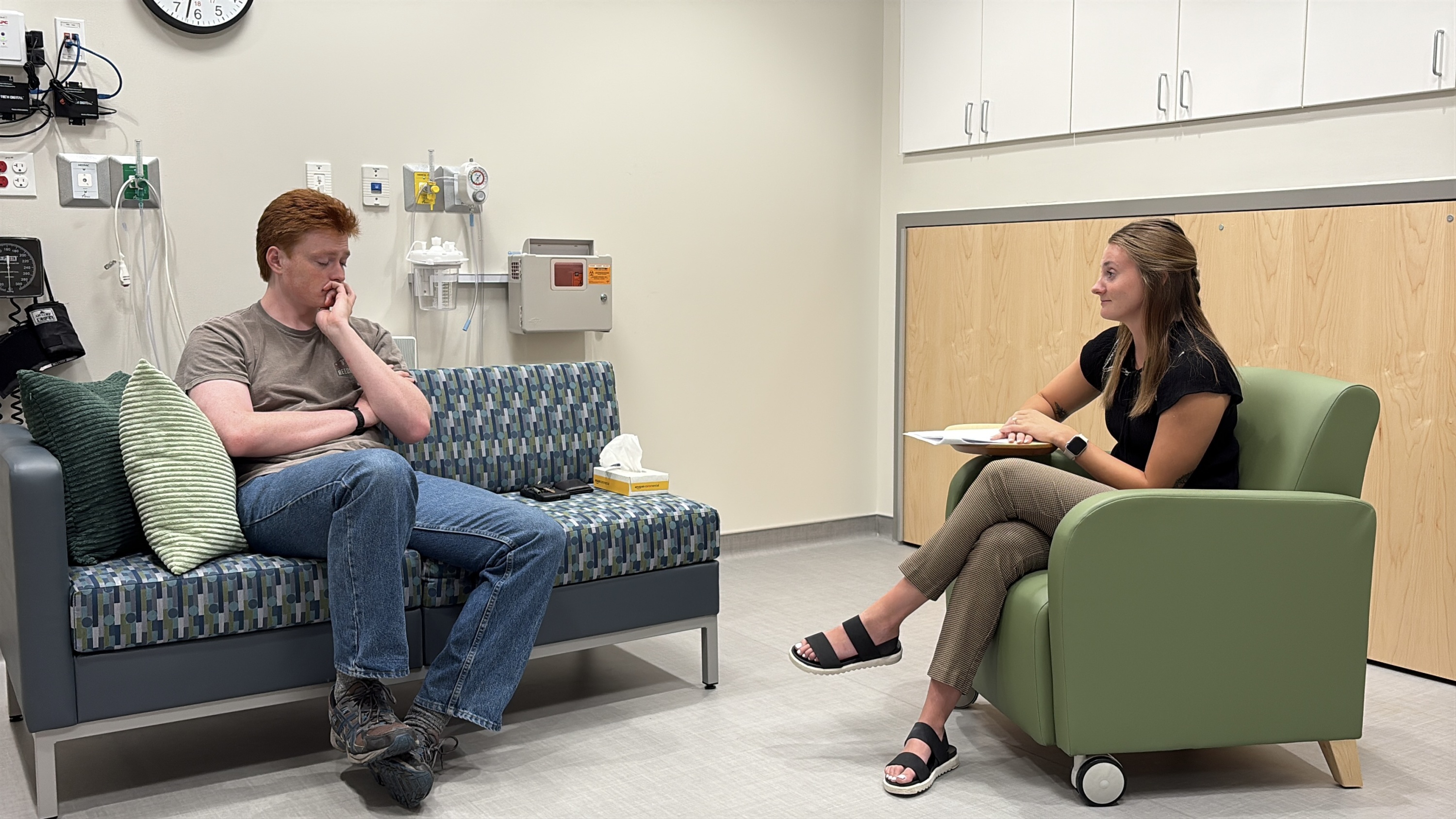
Gast said these trainings are about more than developing the ability to conduct an assessment.
“We're helping them learn how to listen carefully, build rapport, respond to what a client is communicating, and make thoughtful decisions,” she said.
For Rand, she’s drawn to working with people who have experienced trauma, so the opportunity to have such structured practice has been important for navigating complex challenges.
“I love helping them not just survive, but really, truly enjoy living,” she said. “With this, I think that you get a field experience in a really unique way. You're still being held by your supervisors and your professors, while you're kind of feeling your way around and learning how to do it — I think that prepares you very well for the work environment and being a social worker.”
Koskela found his way to social work after initially studying kinesiology and exercise science. He said the program's supportive faculty and emphasis on discussion help students relate classroom concepts with real-world situations.
“They're so caring every day," Koskela said. "They're checking in with all of us to see how we're doing. Any time you reach out to them for any type of question or problem, they're always right there to help you out.”