Local changemakers are working hard to address food insecurity in our community. Often these efforts are supported by state funding — putting dollars into the services our neighbors rely on.
On Jan. 29, the Minnesota Office of Higher Education announced the recipients of the 2026 Hunger Free Campus grants.
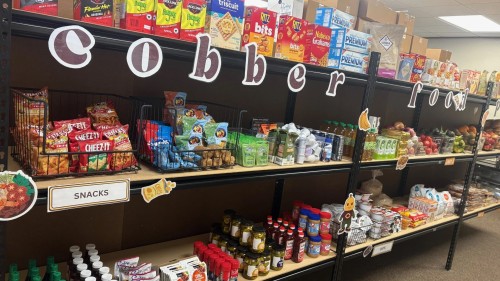
Moorhead’s own Concordia College was awarded $44,516.19 to support the Cobber Food Pantry, a free resource for students located in the Old Main building.
Food insecurity is a growing issue facing students on campus, according to reporting by The Concordian, noting that the cost of living keeps rising while wages stay flat.
“Inside the pantry, students will find nonperishable staples, snacks, and hygiene products,” The Concordian reports. “Students are free to take what they need — there is no limit on how much total food they can pick up.”
On average, the pantry is visited by around 170 students each month, Health Promotion Coordinator Michelle Draxten told Churches United.
 Over 175 unique students used the pantry’s services during the 2024 to 2025 academic year, she said, totaling 1,730 visits with more than 14,600 pounds of food distributed.
The Hunger Free Campus grant will not only help Concordia sustain the Cobber Food Pantry, Draxten said, but also support the student workers who keep the pantry running smoothly.
“We are fortunate to have two food pantry assistants this year,” Draxten said. “Their roles include working pantry shifts, food rescue every week with Hornbacher’s, maintaining an organized and clean pantry, and providing a welcoming and inclusive pantry environment for Cobbers.”
Concordia is working hard to reduce the impact of food insecurity on students, Draxten said.
Each year, the college hosts several educational events around hunger and, every winter break, students who stay on campus are offered a food box to prevent any loss of access to nutritious meals.
Further, all student workers are provided information about applying for SNAP benefits, she said, and Concordia offers emergency assistance grants to students.
In addition, she said, Dining Services and the Student Government Association have partnered to ensure that any leftovers from the dining room are frozen and redistributed to students through the food pantry.
Those efforts are echoed in campuses across Minnesota.
In total, the Minnesota Office of Higher Education distributed over $360,000 in funding to nine private, non-profit institutions and Tribal colleges throughout the state.
The state created the Hunger Free Campus grants to do just that — end hunger on college campuses.
“For too many Minnesota students, food insecurity is a daily concern,” OHE Commissioner Dennis Olson said in a release. “This initiative is helping students access the nutrition they need to focus on their studies and finish their program. I look forward to a day when every campus in the state is hunger free.”
In order to qualify for Hunger Free Campus grants, each recipient must match the award by at least 50% through in-kind or monetary contributions as well as meet the following requirements:
-
Run an on-campus food pantry or partner with a local food bank
-
Provide students with information about programs that reduce food insecurity
-
Hold or take part in one hunger awareness event per year
-
Offer emergency assistance grants to students
-
Maintain a hunger task force
More
For questions about the Cobber Food Pantry, including questions about donations and volunteering, call 218.299.3514 or email foodpantry@cord.edu.