Concordia prof creates skill-based health education resources for teachers
When you think back to your health education experience, what do you remember?
For many of us, it's hazily remembered as uncomfortable classes focused only on sex ed or packets of worksheets chock full of statistics and definitions or long, lecture-heavy classes. Others remember nothing at all or have horror stories from their classes, and some even believe that health education goes beyond its scope and brainwashes students.
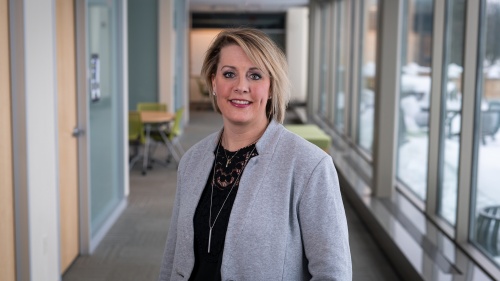
However, Dr. Kristen Ford ’00, professor of education at Concordia College and director of the Master of Education in health and physical education program, believes that health education is so much more than that. She believes that, when taught effectively, it is a quality experience because it doesn’t tell students what to think but rather helps them learn how to think.
“Health education is an essential component of a well-rounded education,” Ford said. “I love teaching health because students generally see how health is relevant to them and others.”
It all started with a vision.
When Ford was deciding what she wanted to be when she grew up, she went through a variety of different professions before ultimately settling on teaching. She wanted to help shape students’ lives and support them throughout their journey.
More importantly, Ford wanted to be on the proactive side versus the reactive, supporting students before they experimented or made high-risk choices instead of dealing with the aftermath of those choices. She wanted to teach them how to say no instead of repeating the “Just Say No” health education campaigns that failed to teach them how to do so.
Ford believes the focus should be on equipping students with knowledge and skills that will help them know better so that they can do better.
 And this vision is what led her to create THE FUSED Health Education Series and a website for health educators called THE FUSED Toolbox. This work was co-authored by Dr. Julie Knutson, professor of health and human performance at Minnesota State Moorhead.
THE FUSED series currently includes 12 published articles in the Journal of Physical Education, Recreation, and Dance, a peer-reviewed professional journal. The series introduces THE FUSED technique and covers the characteristics of effective health education curriculum, ideas for formative assessment, and more, with planned pieces on AI in the health classroom and skill cues.
THE FUSED is an acronym for Teaching Health Education Functional (data-driven) information Using Standard 1/HBOs Skill-based cues Engaging teaching strategies Daily application in developing health literate K-12 students.
At its core, FUSED represents a skill-based curricular approach to health education for K-12 students, designed to actively engage learners through diverse participatory methods.
The FUSED Toolbox supports health educators by serving as a one-stop spot for all things health, offering resources created by health educators to support both teachers and their students, all organized in a single website.
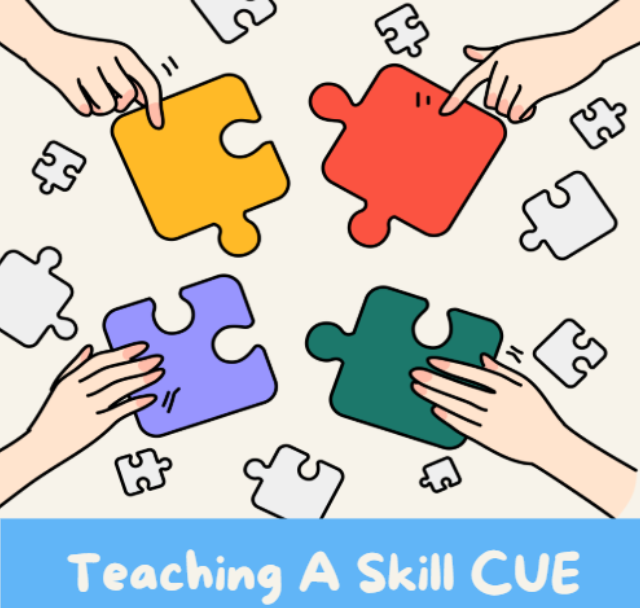 FUSED purposefully couples relevant health topics students may experience with matching skills, so that when they know better, they can do better because they have the essential skills needed, Ford said. The skills included can vary, but the standards identify these: analyzing influences, accessing valid and reliable resources, communication, decision making, goal setting, demonstrating practices and behaviors to support health, and advocacy.
Together, the journal articles and THE FUSED Toolbox address a gap in health education resources across both higher education and K-12 settings, while also tackling a common challenge many educators face involving transitioning from content-based teaching to skill-based learning.
Many of the same skills are useful for people hoping to go into health education.
“Effective teacher characteristics and dispositions can vary, but we look for people who are passionate about health education and students,” Ford said. “Those who can connect with others by being approachable; those who are called to work with others and support and guide them through this thing called life. And when we ask future students what they remember from their health education experiences, they confidently answer ‘skills!’”
More
- Study Education at Concordia
- Study Physical Education and Health Education at Concordia
Written by Nadira Kakonge ’27