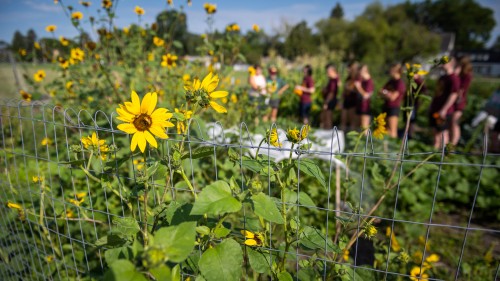
Concordia College is partnering with Growing Together Community Gardens to make the college’s Cornucopia Garden the organization’s first community garden in the city of Moorhead.
The partnership is designed to expand opportunities for student learning and involvement, foster sustainability, work toward food justice, and strengthen community engagement.
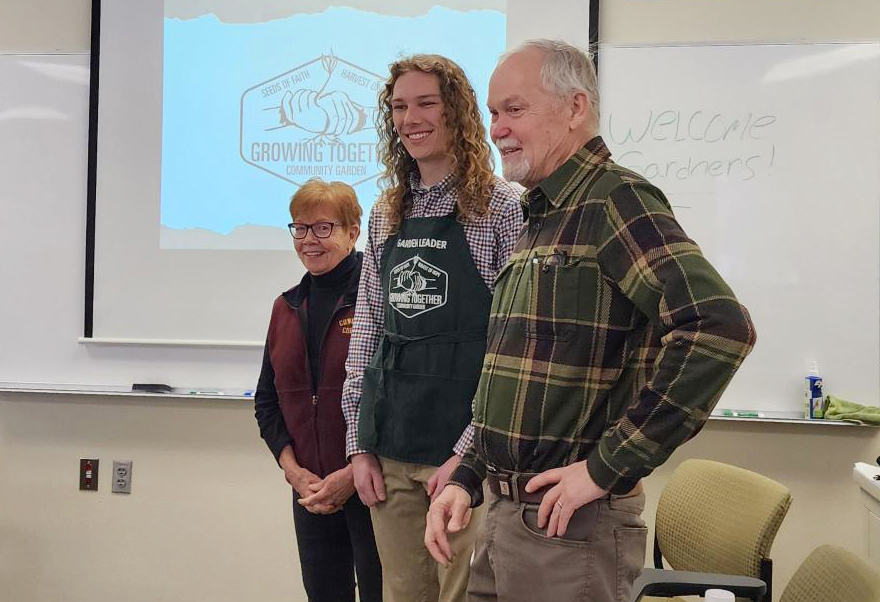 “Gardening is good for the body, mind, and soul, I would say, and for you and for the community,” said Dr. Joan Kopperud, professor emeritus-in-residence of English at Concordia.
Kopperud got involved with Growing Together about five years ago and has seen the project’s positive impacts on families. She encouraged students to join the fun, noting that they could split the work — and the full share of produce — between roommates.
“We would love to have more college students involved,” she said.
The Cornucopia garden is located at 1201 11th St. S. in Moorhead.
Growing Together will provide day-to-day garden management, weekly community gardening sessions from 5:30 to 7:30 p.m. on Wednesdays during the growing season, seed-starting, and educational programming. Concordia will provide access to the garden site and facilities, and support academic integration of related projects.
 Students will benefit through enhanced learning and research opportunities, as the Cornucopia is fertile ground for soil studies, First-Year Seminar projects, course collaborations, and faculty research across multiple disciplines. They’ll also benefit from closer ties to the Fargo-Moorhead community, with plenty of potential for educational workshops and events, as well as intercultural learning stemming from sharing growing traditions and gardening methods.
Growing Together started in 2006 to address food insecurity and help new Americans feel more at home in their community, said Jack Wood, co-founder and board member of Growing Together. The nonprofit has since expanded to nine community gardens in Fargo, with Concordia’s bringing the total to 10.
The organization’s vision for community gardening isn’t individuals planting and harvesting small plots on their own, but of a large group of people gathering once a week for two hours to nurture a large garden together.
Prospective gardeners should know that while everyone pulls weeds and waters plants every week, almost all the other tasks vary with the season.
“You’re not doing monotonous work every week. There are lots of fun things,” said Henry Skatvold ’27, one of the Cobbers involved in Growing Together. “Manual labor can be fun, but it’s really rewarding once you get to the end and you can harvest and take everything out. It’s really fun.”
 When the produce is ready to harvest, it is divided equally among the members who have worked in that garden for at least 20 hours. A substantial amount of produce is also donated to local food banks each year — more than 9,000 pounds last year.
The funding that keeps the gardens going, from seeds to tractors to insurance, comes from donations and sales at a local farmers market, where two gardens send about half their produce during the season.
“I have lived in this town my whole life, born and raised, and I have never met the massive diversity of people from all walks of life that I have in the garden,” Skatvold said. “It’s wonderful. … It’s a lot of fun to connect with all these different people who all share that same passion for gardening and good food.”
Joining Growing Together has sparked plenty of interest in the Cornucopia, which as of Feb. 18, only had five remaining openings for prospective gardeners, Wood said. Should those spots get snapped up by hungry Cobbers and community members, though, other Growing Together locations are still seeking signups.
To sign up, visit the Growing Together website.