
The cascading, rhythmic pattern of a butterfly’s wingbeat and the rising swells of chattering bee swarms form some of the key sounds and rhythms of the unusual music set for its world premiere at Concordia College’s upcoming circuit721 recital.
 “Wingbeat” and “Drones” are the work of Dr. Doug Harbin, associate professor of music theory and composition at Concordia, and scientist collaborators Dr. Courtney Grula, a research scientist with North Dakota State University, and Dr. Brent Hulke, who studies sunflower breeding with the U.S. Department of Agriculture.
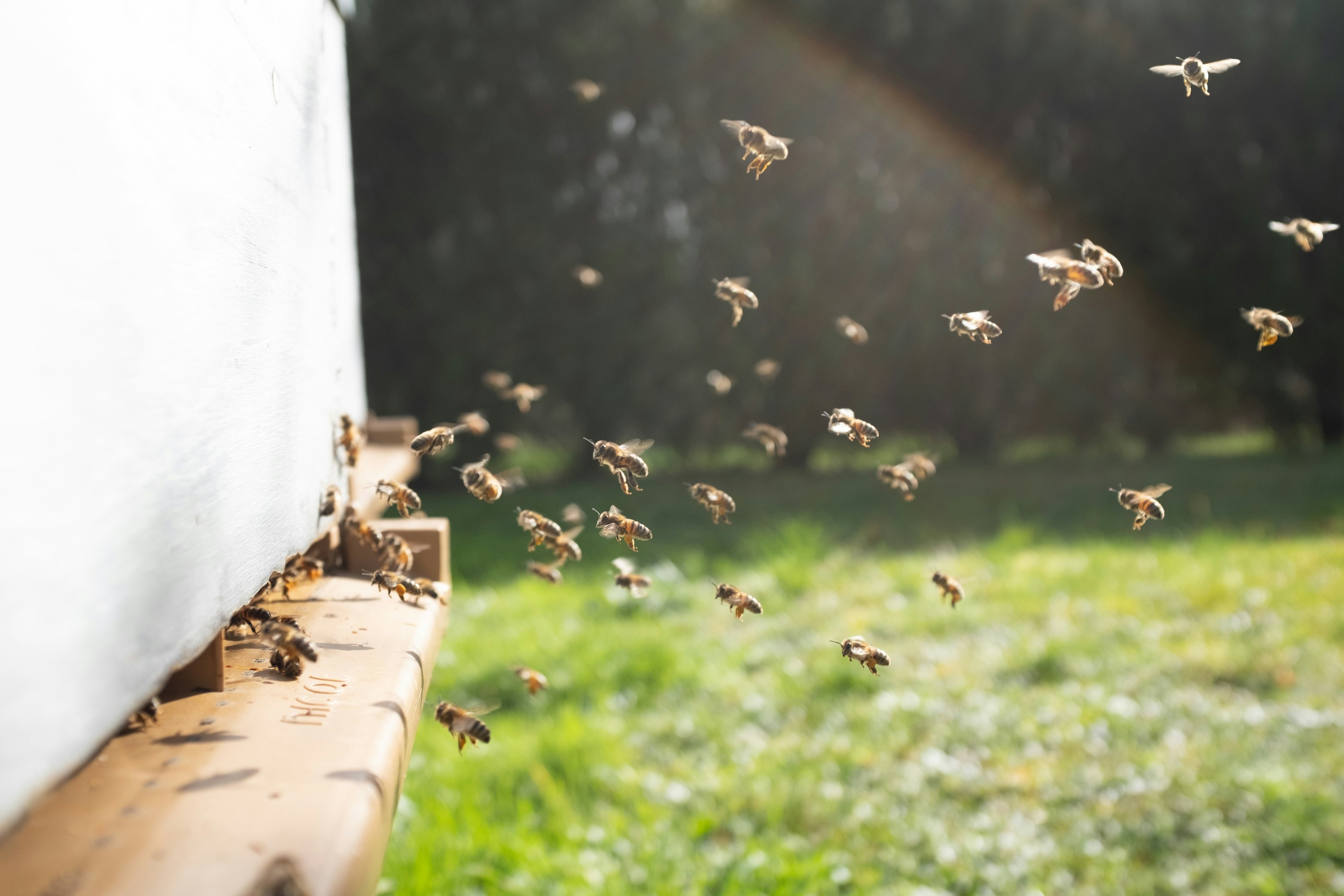
To create the music, Harbin recorded the sounds of monarch butterflies flapping their wings and of bees in a beehive, using the audio snippets to build complete songs.
“As someone who loves the outdoors, I have always been inspired by what composer Pauline Oliveros describes as ‘deep listening.’ This involves listening to the sounds around us — in whatever environment we find ourselves in,” Harbin said. “I personally find this most enjoyable when I am hiking alone in a remote environment. So, getting the opportunity to complete field recordings in a sunflower field or around a beehive was a source of great joy, as I could now share the sounds that I heard with the world and create a fictitious, make-believe landscape.”
After recording the sounds, Harbin manipulated, arranged, and organized them, a process a bit like enjoying a sonic playground.
“What happens when you employ certain processes on the sound of a butterfly or a bee? How does that change how we think of the original sound? Can something like the gentle flap of a butterfly wing become formidable or intimidating? Can the buzzing of a bee become harmonic?” he explained. “How can one organize these sounds to form a cohesive piece? Being a lover of puzzles, these become fun challenges.”
 The results are captivating, running the emotional spectrum from playful and upbeat to ominous and all-encompassing.
“In general, I think electroacoustic music affords the widest variety of sonic possibilities to audiences. Not only will there be recognizable recorded sounds from nature and traditional sounds from acoustic instruments, but there will also be all sorts of manipulated sounds that blur the lines between acoustic and electronic,” Harbin said. “What I love about electroacoustic music is how it lets the listener’s imagination run wild!”
The evening will begin at 6 p.m. Sunday, Jan. 18, in Christiansen Recital Hall, Hvidsten Hall of Music, with a pre-concert talk exploring the research with local pollinators and sunflowers, providing context for the new works.
The annual circuit721 recital, known for groundbreaking presentations of electroacoustic work, will continue with guest artists Dr. Eduard Teregulov, assistant professor of cello and double bass at Concordia, on the cello, and Dr. Sonja Bosca-Harasim, violin.
The concert is free and open to the public.
Harbin’s work was featured in “Minnesota composer finds insects make bee-autiful music” by Dan Gunderson for MPR News.
More
Music composition at Concordia
Minnesota composer finds insects make bee-autiful music by Dan Gunderson for MPR