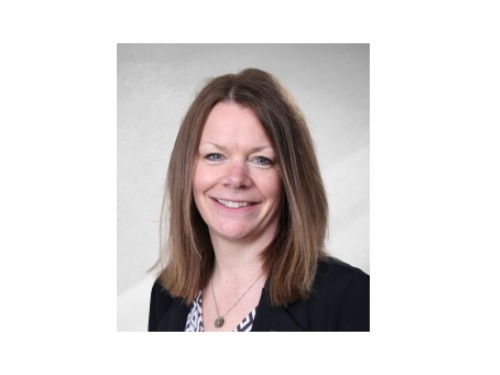
Dr. Connie Peterson, associate professor of nursing, was in Haiti on a mission trip at the time of the tragic earthquake. Read her account of the quake and what happened in the aftermath.
I was in Haiti with a group of 11 people from Trinity Lutheran Church in Moorhead to complete construction projects at a school in Pignon, a small town about 80 miles inland from Port au Prince. There was also a medical group from our region that was doing surgeries at the local hospital at that time. When the earthquake hit, we felt the ground shake and heard the buildings shift. It was immediately obvious that there had been an earthquake and everyone fearfully rushed outside of buildings. Many of the buildings in Haiti are poorly constructed, mostly of cement block and plaster without any reinforcement with rebar or wood. That explains why there was such devastating destruction in Port au Prince. The earthquake occurred at around 5 in the evening and we did not hear of the situation in Port au Prince until about 10 p.m. because all communication of any kind had been cut off. A generator in our camp provided the only electricity available. There was no cell phone or Internet access until about a day and half later. Even then, only satellite phones (there was one in the entire region) and one cell phone company were working intermittently. The Internet access was very sporadic and extremely slow. By the time you reached a site, the power would blink and the computer would shut down.
Since I am a nurse, I was sent to the hospital the day after the earthquake to assist with recovering surgical patients. There were many aftershocks after the original earthquake and there was great fear that the hospital would collapse. We wanted to clear out all possible patients and there was a lot of work to do to organize surgical supplies in preparation for refugees soon to be arriving in the area. At one point that day, due to concerns about safety in the concrete hospital building, we had to evacuate every person from the hospital. I was assisting in recovering a patient just coming out of anesthesia. We had to run to get the gurney out in the courtyard of the hospital. We held the patient's IV bag up by hand and ran outside with only a backpack full of dressings, a stethoscope and a blood pressure cuff. We had to make a human body shield while we attempted to do sterile dressing changes to stop the bleeding she had post-operatively. It was a surreal experience. With almost no language skills we had to communicate in one-word sentences that we’d learned in Creole. The most useful words I learned were: "pain", "cold", "fine", "family" and "you are welcome.” The Haitian people were the most gracious, resilient people that I have ever had the privilege of meeting.
The trip home was absolutely exhausting. We had to drive in a bus for 12 hours to get across the northern part of the country and across the Dominican Republic. The roads in Haiti are almost non-existent and we wound through mountain paths on rocky ruts that had washed out from recent torrential rains. We also forded two swollen rivers that our bus literally floated across. The border crossing in the Dominican Republic was harrowing. We had to walk across on foot against traffic on market day. We literally had to hold on to each other’s shirts to keep from getting separated and crushed by large carts of bananas, potatoes, rice and other goods travelling into Haiti. It was indescribable and the most terrifying experience of my life. We travelled across the country to Puerto Plata and flew to Miami from there. By the time we returned to U.S. soil we were exhausted, dirty, and grateful to be home. The warm welcome by family and friends was so appreciated. We cannot express how much the support of the community has meant to us.
Our Haitian hosts, Hosean International Ministries, went to heroic lengths to assist our group and the local medical team in evacuating the country through the Dominican Republic. We feel blessed to be able to provide an eyewitness account of the situation in Haiti and we are in a unique position to spread the word about where people can send donations that will do the most good for the most people. The Haitian people have local leaders who can immediately assure safety, food and medicine to refugees from Port au Prince, but they need the resources to enable them to do so. The agency we worked with personally is a perfect example of a legitimate local agency. They have extremely little overhead and we have seen with our own eyes how the money is used. They are already busy delivering supplies and feeding needy people in the area. We urge people to share their blessings by sending money to this organization at www.hosean.org. They need our help in the days and months to come to provide ongoing assistance to the Haitian people.