Pre-law advisor Dr. Nick Howard shares how the interdisciplinary program prepares Concordia graduates for a professional life in the legal field and beyond.
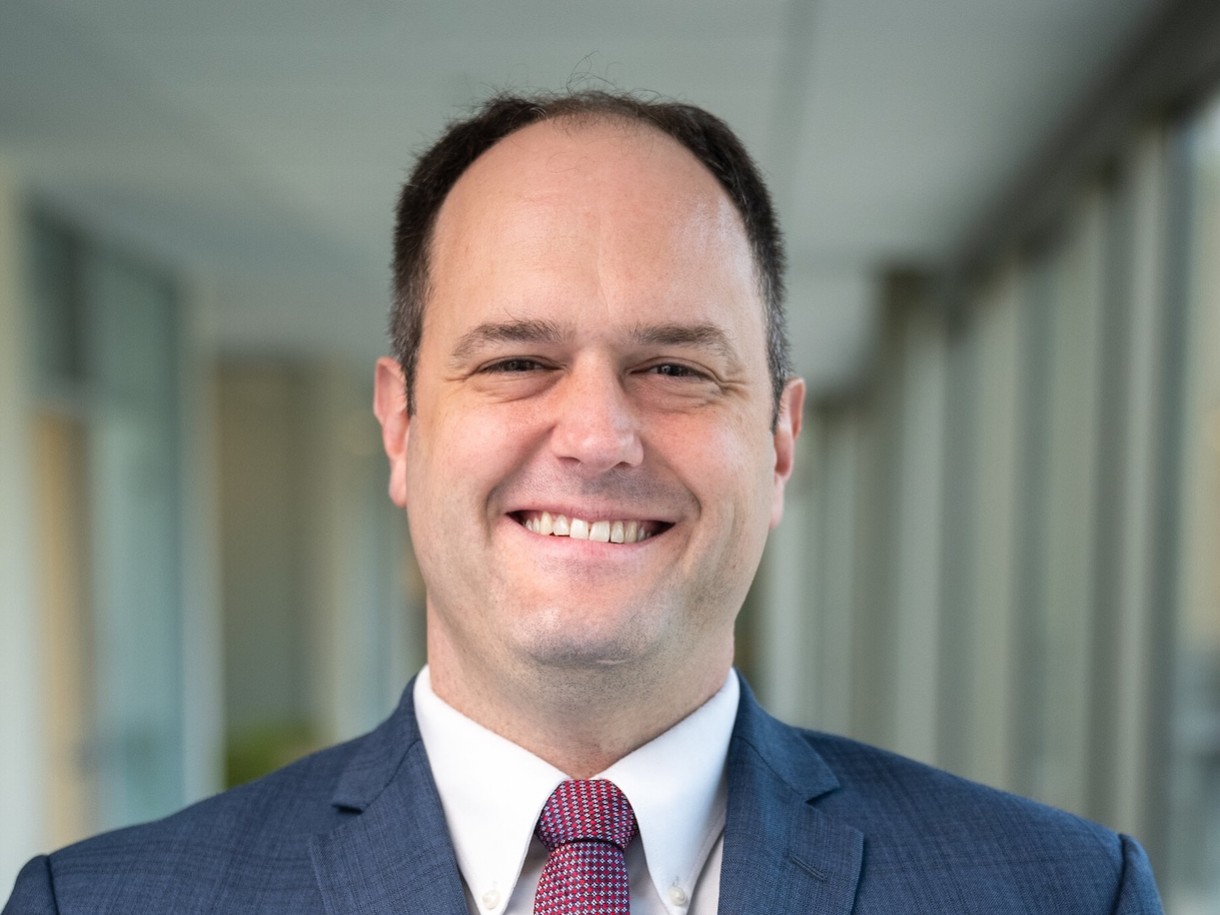
Dr. Nicholas Howard
Assistant Professor, Political Science
Advisor, Pre-Law Program
Please tell us about your background.
I grew up in small towns throughout Kansas and graduated from Wathena High School in Wathena, Kansas. I lived in several towns throughout the state growing up, including towns of less than 300 in the western part of the state. I first became aware of politics during Sen. Bob Dole’s run for the presidency in 1996. I continued to develop my interest in politics and social science during my undergraduate education at Carleton College, in Northfield, Minnesota, graduating with a major in political science. I focused on policymaking and political institutions throughout graduate school, completing my master’s degree at the University of Kansas and doctorate at the University of North Carolina, Chapel Hill, both in political science with a focus in American politics and methodology.
I was then fortunate enough to be selected as an APSA Congressional Fellow placed in a senate office, providing a unique window into lawmaking in American government. I then started my appointment at Concordia College in 2023 after teaching at Auburn University at Montgomery (AUM) in Alabama since 2016. In my spare time, I enjoy hanging out with my family, hiking and outdoor activities, participating in and watching sports (Rock Chalk), and a burgeoning hobby of cooking.
What brought you to Concordia College?
As a graduate of a liberal arts institution, the opportunity to engage with engaged, committed undergraduates was the greatest appeal of Concordia College.
How long have you been teaching at Concordia? What courses do you teach?
I have been at Concordia for three years. I teach courses on political thought, American politics, and methods of quantitative research. These include PSC 121: Introduction to Political Science, PSC 211: U.S. Political System, PSC 303: Jurisprudence, PSC 311: Methods and Techniques of Political Analysis, PSC 357: Congress, PSC 388: Campaigns and Elections, and PSC 433: American Presidency.
What course is your favorite to teach and why?
I enjoy each of my courses, each for a different reason. To give some examples, my PSC 357: Congress course is the closest to my own research and history, as I worked in the U.S. Senate as a Congressional Fellow and research procedures and elections in Congress. This class features elements of my own experience and research as a result, giving students the opportunity to see what political encounters look like within a legislative setting.
I also greatly enjoy my PSC 388: Campaigns and Elections course, as this is centered on students actively developing the campaign portfolio of real members of the Minnesota state legislature. Thus, students get the opportunity to see how candidates react to real-world events and think through the lens of how their campaigns address the world.
Finally, my PSC 311: Methods and Techniques course is greatly enjoyable because it gives students the skills to produce their own research and participate in academic pursuits beyond the classroom. This class leads to fascinating student-designed projects, and students amaze me with their creativity and capability.
What unique opportunities do students have in the pre-law program and what connections are made with the legal community?
We offer students an opportunity to develop their legal, reasoning, and communication skills at Concordia. Students get the chance to take courses across a variety of disciplines, helping them connect with areas of interest to them. We also encourage students to apply for internships and help them, along with the Career Center, to pursue these opportunities. We also bring representatives from a variety of law schools to campus for sessions, giving students a chance to ask questions of these schools and explore their fit.
What student organizations are affiliated with the pre-law program? Can you share a little about each of those cocurricular experiences?
The Pre-Law Society allows students to connect with other law-interested students at Concordia, as well as conducting events on and around campus. The society runs a few sessions each year on preparing for the LSAT, thinking about the law school admission process, and providing an overview of what law school may be like. The group also conducts a tour of a local courthouse and meets with a judge.
The mock trial team allows students an opportunity to see what courtroom arguments are like as participants. Working through different roles in a trial, students simulate a case given to them by the American Mock Trial Association, and engage in competition against other colleges and universities to win the case.
Their passions can build into their ideas for a future career.”
Please briefly describe the new pre-law minor.
The pre-law minor is a 20-credit program at Concordia College. This includes two required courses, Constitutional Law and Jurisprudence, designed to help students develop not only the knowledge for legal fields but also the ability to reason through arguments and think about the varied perspectives of participants in the legal process.
Students then complete an additional 12 credits of electives across disciplines, including business, communication studies, English, religion, history, sociology, philosophy, environmental and sustainability studies, women’s and gender studies, and healthcare leadership. Courses range from Business Law to Strategic Communication and Public Relations to Editing and Grammar for Professionals to Nature’s Place in U.S. History, giving students the opportunity to try various approaches to legal questions and gain a better understanding of how their passions can build into their ideas for a future career.
The interdisciplinary aspect of the pre-law minor allows students to train not only for law school but also for participation in the broader legal field, as well as in political, business, and communication professions, and graduate school.
What do you love about your job?
The opportunity to engage with engaged, committed undergraduates is a great part of my life at Concordia College. I routinely challenge students with complicated, nuanced examples, discussions, and simulations of real-world problems, and students are able and more than willing to participate in these environments. Additionally, students put in effort to develop their skills in applied practice and academic research, often bringing up interesting elements and arguments that I had not yet considered.
How does Concordia allow you to be passionate about your work?
Concordia gives professors the opportunity to teach courses that are passions for them and generates better classroom experiences for students. These students then become engaged with faculty members on a personal basis, involved in research projects, and increase student and faculty contributions and development.
How does Concordia differ from other places you have worked?
The focus on undergraduate education is unique among liberal arts colleges, and Concordia is a great example of that.
Why is a liberal arts education important?
A liberal arts education provides students the skills, knowledge, and capabilities to be successful across a range of fields. Rather than developing specialized, siloed skills that speak to only a narrow range of professions, a liberal arts education focuses on critical thinking, logical reasoning, and the ability to communicate across different disciplines through written and verbal presentation. These skills lead to successful applicants for further education in graduate, medical and law schools, professional work in the legal, business, and government sectors, and set the stage for successful career advancement.
What do you see in your students?
In Concordia students, I see engaged students participating in a vibrant community. Students participate in a variety of activities within and outside the classroom, meeting challenging goals set by professors and coaches, and growing into their potential.
What research are you currently working on with students?
I am currently working on a few different research projects with students. The first involves the students and I collecting all state agency regulations over a 10-year period for all policy areas. In total, this will amount to around 250,000 regulations that we will collect. We will then use these regulations to explore what states do in regard to regulatory actions, how much this varies across states and within a state over time, and how states centralize a policy area such as environmental protection within a single agency or diffuse it across several agencies.
Another project with students explores the content of Senate Judiciary Committee hearings for district and appeals court nominees — and what that content means for the consideration and confirmation of nominees. We are exploring how previous Supreme Court decisions, or precedents, are used by senators as part of their questioning of nominees to influence their possible confirmation. Moreover, we are exploring how a senator’s electoral environment influences their choice of precedent to cite and tone when doing so. This project also includes explorations of when and how senators and nominees bring up judicial philosophies and outlooks as part of the confirmation process.
A third project is an extension of a student project for my Methods and Techniques course. This project considers why bills limiting the executive branch receive attention — or fail to receive such attention — in Congress. Exploring the effects of partisanship, support of the president, and institutional position, this project offers additional insight into how and why Congress participates in the separation of powers.
What is your favorite part about working with students?
The space to engage with engaged, committed undergraduates is a great part of my life at Concordia College. I routinely challenge students with complicated, nuanced examples, discussions, and simulations of real-world problems, and students are able and more than willing to participate in these environments. Additionally, students put in effort to develop their skills in applied practice and academic research, often bringing up interesting elements and arguments that I had not yet considered. These same students later become collaborators on projects, generating new knowledge in the fields of policy and politics.
What recommendations do you have for students thinking about graduate school?
There are two things I recommend to students thinking about graduate school. While graduate schools, of course, look for high GPAs, this is by no means the only criterion for consideration. The first piece of advice I give to students is to take challenging courses. Graduate schools look beyond simply GPA and often read transcripts and files for challenging courses in a student’s major and beyond.
The second piece of advice I give to students is to develop a relationship with their professors. While office hours are definitely useful for getting clarification on a given class, using them only for that purpose dramatically undersells what office hours can and should be. Go in to talk about your own interests, ongoing events in the world, or even ideas outside of the course but within the general subject. Professors are complex people with different interests, and one of those interests is in getting to know students. Developing these relationships helps professors write better recommendation letters, advise on what programs may be of more interest, and provide a host of other useful resources.
If you were talking to a prospective student, what would you tell them is a reason to study pre-law at Concordia?
A pre-law minor provides students with the critical thinking, communication, and logical reasoning skills that are valued across any number of fields. The interdisciplinary nature of the program makes it a great option for students looking to build their understanding of the legal profession or for students looking to double major with an applied minor. We frequently have students who double major in some combination of political science, business, accounting, communication, environmental and sustainability studies, English, history, and philosophy, among other fields. This gives students a well-rounded understanding of their interests and the skills to be successful in the professional and academic worlds.
What is your book manuscript about?
My central interest for research is about how the lawmaking and electoral processes function in America. This appears in three fashions in my work. First, I explore the mechanisms and procedural details of lawmaking in legislatures. This includes which members and parties are able to make their proposals into law but focuses more on what procedural rules are used to do so — and how individual legislators can get their way or slow down the process. Specifically, this is focused on holds — or threats to object and filibuster on the floor — in the U.S. Senate, the bypassing of committees throughout Congress, and the structural balance of partisan rules in state legislatures.
Second, I explore executive and bureaucratic processes for staffing and rulemaking. This focuses on how confirmation processes work for judges appointed by the president, how national agencies respond to the policy statements of the president, and how state agencies function as rulemaking bodies.
Finally, I also pursue questions related to legislative and executive elections. These center on questions of how the difference in campaign advertisements across a state change county-level outcomes in statewide primary elections and how the difference between campaign donations in primary and general elections alters our understanding of a candidate’s ideological position.
What drew you to that topic?
While I completely understand that some people find politics obnoxious, annoying, and off-putting, I find these types of questions fascinating because politics is how we choose to govern ourselves. The U.S. as a democratic society comprises more than 300 million people with varied interests, geographies, and situations that must come together in order to make decisions — and questions about legislatures, executives, and elections are how we accomplish that task. While the process is not always as clean as we might like, and frequently more complex than may appear necessary, understanding and analyzing the complexities of the political world allows an understanding of what our government is doing on our behalf and how we can contribute to policy outcomes an individual may favor.
What do you enjoy about the Fargo-Moorhead community and in what ways are you active outside of Concordia?
I greatly enjoy the outdoors and take advantage of the activities in the region. I play golf during the summer, and my children love going to the lakes around the region.
Do you have any advice for students considering Concordia?
Students considering Concordia — or any college — should consider not only the courses available to them but also the relationships between professors and students. Concordia does an amazing job of giving students the capability and opportunity to engage with professors in classroom settings but also beyond the classroom. Students engage with faculty members at events around campus, participate in research alongside faculty, and are part of the process of campus itself. The Celebration of Student Scholars (COSS) is a great example of this, as we direct classes throughout an entire day to student projects conducted in collaboration with faculty members, an opportunity for research training not available at many other schools.
Published March 2026