A graduate of Concordia’s social work program herself, Dr. Kristi Loberg ’93 is committed to preparing students to help meet workforce needs.
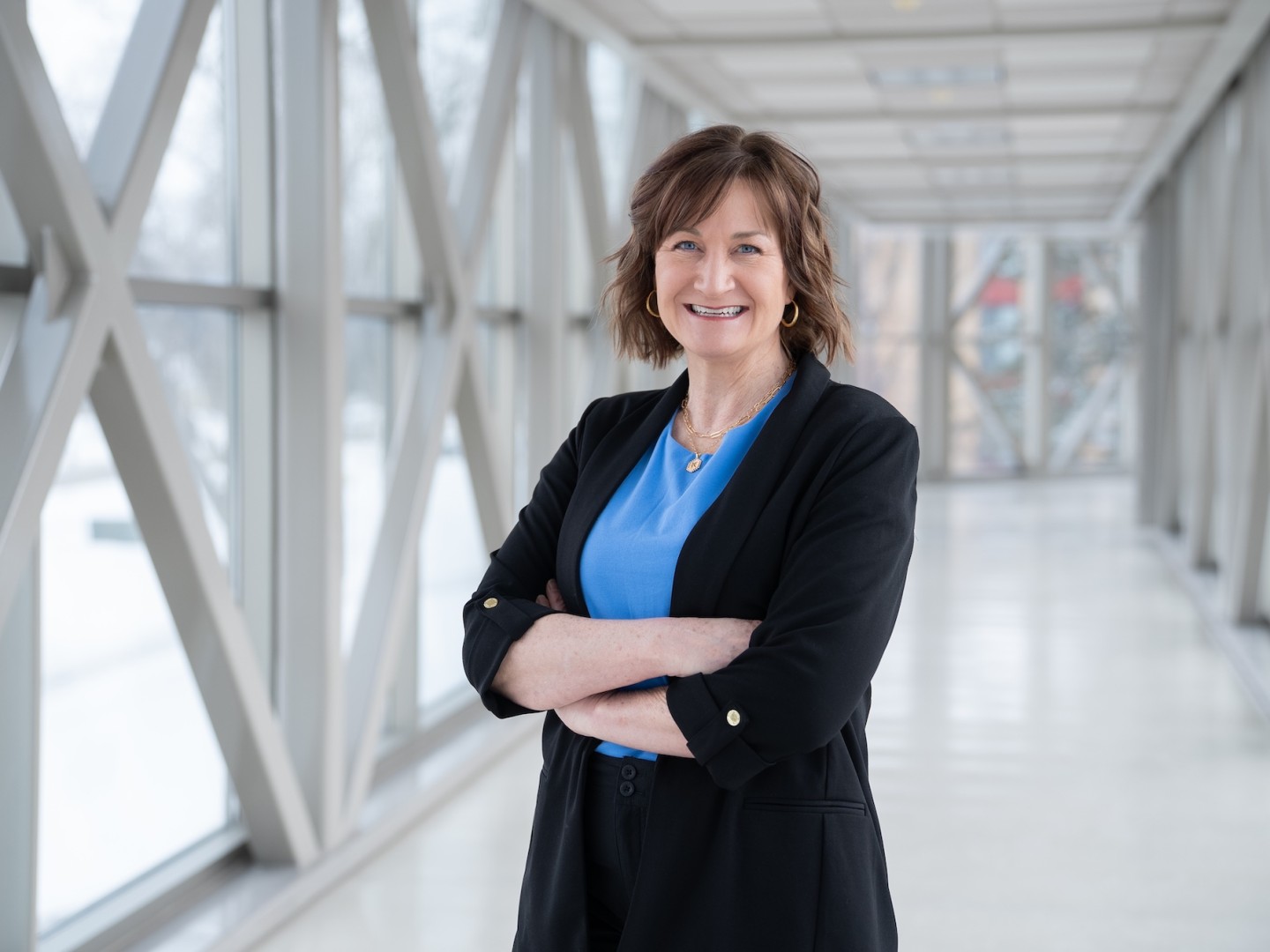
Dr. Kristi Loberg ’93
Director, Center for Population Health
Professor of Social Work
Field Director, Master of Social Work Program
Please tell us about your background.
I grew up on a farm in rural Gary, Minnesota, and graduated from Gary High School, which is now combined with other high schools in neighboring towns. Like many of my peers at the time, we were among the first in our families to attend college — in part due to some excellent teachers who saw potential in students, provided encouragement, and created pathways. I’ve always taken that with me. I’ve been fortunate to be in a role at Concordia in which I get to see potential in students, encourage them to accomplish their goals, and help create pathways. It is similar to the work I did as a professional social worker, and it is hugely rewarding.
What are your hobbies outside of work?
My husband and I have lived in the Fargo-Moorhead area for 25 years. Now that our two boys are grown, we mostly spend time with extended family and travel when we can. I also like to cross-country ski in the winter, weather permitting. I’m realizing lately that I also like to cook. When I had kids at home, I made meals out of necessity, but now I miss cooking for others and find joy in cooking new things. My mom was a cook in a nursing home for years and she regularly involved me in cooking for large numbers of people when growing up on the farm, so I think it is just part of how I organize life.
What did you study in college?
I was a first-generation college student who enrolled at Concordia without a clue of what I would study, but I knew it would involve working with people and problem-solving in some way. I leaned into the liberal arts foundation of the college and trusted the process. I joined the Credo Honors Program as an undergraduate student, which not only grew my network with other students but also expanded my worldview and academic preparation.
I studied social work as my major with a minor in political science. I’ve always been interested in helping people succeed and how systems (social, economic, and political) can work best for people, so the combination of social work and political science was a great fit for me.
Following college, I worked as a children’s mental health social worker in a rural Minnesota county. It affirmed my love of working with people and the importance of understanding systems. I continued for my Master of Social Work degree from the University of Wisconsin-Madison with a mental health concentration and became a Licensed Independent Clinical Social Worker (LICSW), serving in another rural Minnesota county as a therapist working to support and strengthen families facing barriers related to mental health, substance use, and economic stress.
What brought you back to Concordia?
After practicing social work for a number of years, I took a position teaching social work at St. Cloud State University, which introduced me to the academic side, which I fell in love with. It was so energizing to engage students eager to make an impact through social work. Shortly after, I took a position at Concordia, first as an academic counselor and then as a social work faculty member.
Concordia’s mission brought me back. I realize that might sound cliché, but we as social workers are action oriented — and, to me, we have an action-oriented mission to influence the affairs of the world by preparing thoughtful and informed students. It is bold and purposeful, and it is a privilege to inspire students in this mission and work alongside colleagues equally dedicated to the mission.
I will be completing my 25th year back at Concordia as a faculty member. As an undergraduate student, I didn’t have that on my radar. It is the community culture and a culture of care at Concordia that has kept me here. I have received amazing mentoring and support from colleagues through the years, both professionally and personally, and I hope to reciprocate that to colleagues who I aim to support in my new roles in social work and the Center for Population Health.
What courses do you teach?
I have taught a variety of courses over the years, including Introduction to Social Work and Social Welfare, which is now called Social Work and Social Justice; Social Policy and Systems Perspective; SWK Practice with Families; Comparative Cultural Encounters, which prepares students for culturally responsive practice; First-Year Seminar courses focused on human rights and the helping professions; and electives on mental health and leadership. In my new role as field director for the Master of Social Work program, I oversee field education and clinical placement for our graduate students and teach the field seminar.
What course is your favorite to teach and why?
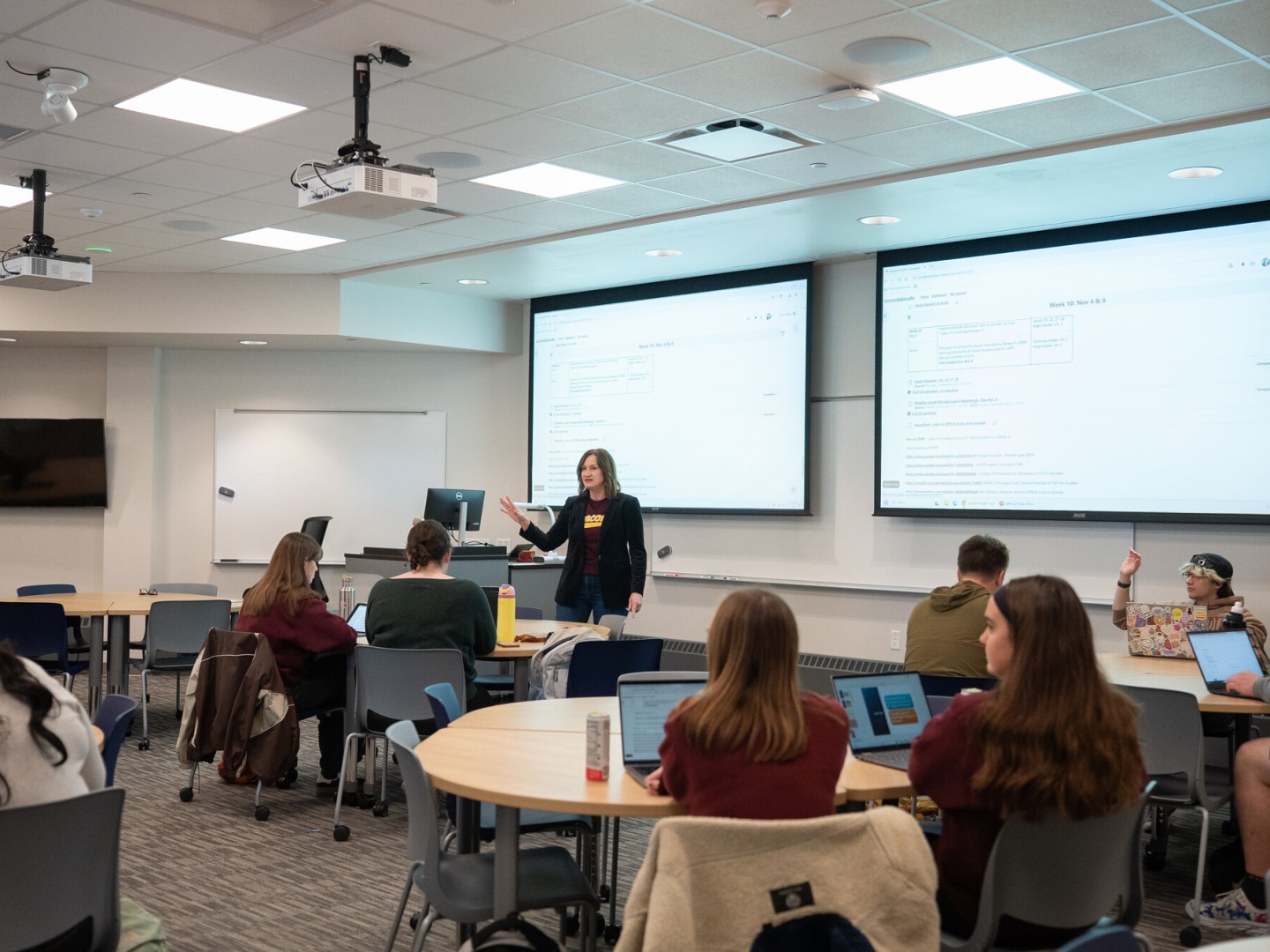
This is a tough question. It’s like picking a favorite child, but I would say my favorite is teaching our social policy course. Admittedly, most social work students go into the field to work with people and not to study policy. It is hugely satisfying to see the “a-ha” moments when students realize the connections to policy and the importance of social policy advocacy as a way to help people. It’s amazing to see students develop new passions as they build advocacy skills and policy knowledge. It can be transformative for some, with past students shifting focus to social work positions related to law, policy, or more macro work. Our hope is that the social policy course helps future social workers to better understand the social and political environment of our work, to function better in organizations, and to advocate for system change that works better for the people we serve.
How has the social work program changed since you were a student?
The biggest change is the addition of our clinically focused Master of Social Work program. We have a well-established undergraduate program, which has been accredited for more than 40 years and produced hundreds of licensed professional social workers at the bachelor’s level. In addition to the demand for bachelor’s-level social workers, there is a growing demand for master’s-level social workers, particularly from clinically focused programs that meet workforce needs for mental health professionals.
Social work is a broad field that prepares students to work with many different populations across the lifespan and in various settings. It is not well known that social workers are the nation’s largest providers of mental health services. With mental health care becoming more integrated across settings such as primary health, schools, criminal justice, and public health, our program can now prepare students for this work at both the bachelor’s and master’s levels. In addition, the advanced year of our master’s program is all online, which allows us to serve students in almost any location and can help to meet regional and national workforce needs. As a new program, we are super excited about the possibilities.
Why do you feel that being a social work major is a valuable discipline to study?
One of the strengths of the social work discipline is its holistic approach. Social workers are prepared as change agents who bring a systems perspective to enhancing individual and community well-being. This is true throughout social work practice, whether in mental health, child and family welfare, medical and hospice care, supporting people with disabilities, impacting the justice system, and other areas.
Alumni and other professionals routinely share with me that social workers are the professionals at the table who represent the big picture — meaning we seek to understand individual needs, strengths, and behaviors within the context of their family and community environment, and vice versa. Effective change is seldom one-dimensional. We usually need a whole system of support to achieve goals and optimal functioning for people and communities. Our dean of the Sanford Heimarck School of Health Professions, Dr. Gwen Wagstrom Halaas, often describes the social work role as the glue that holds teams together and utilizes multiple resources to achieve change.
The social work curriculum that we teach is very intentional about this. It is also compatible with the liberal arts aims of the college. We need social workers educated in the liberal arts — with strong foundations in communication, critical thinking, the ability to consider multiple perspectives, and with an understanding of religion, history, social institutions, and cross-cultural experiences. I have been fortunate to teach in a social work program surrounded by a rich liberal arts environment and with faculty in a program that is so aligned with the college’s mission.
Please briefly describe your goals as field director of the Master of Social Work program.
After serving as the undergraduate social work program director for 20 years, my role shifted. As the field director for our Master of Social Work program, I work with community partners in healthcare and behavioral health settings to develop and manage clinical placements for our MSW students.
The clinical field experience in our master’s program is a significant component, and we are exceedingly grateful to our community partnerships that help make it happen. We have a shared vision to impact access to high quality behavioral health services in the region. We are only in our first year. Our goal is to grow the reach of our program and be known for excellent clinical preparation. To my knowledge, we are one of the only MSW programs in the region using simulation-based learning to prepare students for their clinical placements. As part of the Sanford Heimarck School of Health Professions, we have access to the simulation center and simulation expertise for our students to practice clinical skills prior to placement. We are committed to having our students as prepared as possible for their field placements so they can hit the ground running.
What do you love about your job?
Students. The thing I’ve loved most about the job has always been the students. It is such a privilege to form relationships with them as first-year students, when they are filled with doubt, confusion, and anxiety, and then watch them grow in self-knowledge, confidence, and professionalism. Celebrating students and their accomplishments at our senior breakfast in the spring is one of my favorite days of the year.
A very close second is my colleagues. For me, a big part of staying at Concordia over the years is the genuine care and support that faculty, staff, and supervisors provide at the college. It’s not that things are always easy, but it has been in times of stress and strain that have brought out the best in many of us. The culture of commitment to students, each other, and the college is another part of the job I really love.
How does Concordia allow you to be passionate about your work?
It’s about the mission alignment between the college and my social work discipline in terms of being change agents to prepare thoughtful and informed social workers to influence the affairs of the world. Social work is inspired from faith traditions that teach about love, justice, and service to thy neighbor. I can’t think of a better place to be passionate about this work in pursuit of service and justice.
How does Concordia differ from other places you have worked?
Prior to Concordia, I worked in public institutions in higher education and in public human services where there is an expected separation from faith-based actions. At Concordia, we encourage the integration of faith and learning — not from a proselytizing perspective, but from an interfaith perspective to explore one’s own beliefs and in support of inclusive practices to respect and learn from others. Faith and religious teachings are woven into our individual and social worlds, and Concordia’s commitment to helping students understand this makes better leaders, professionals, and social workers — regardless of a person’s individual faith orientation.
Can you tell us about the new Center for Population Health?
The Center for Population Health in the Sanford Heimarck School of Health Professions is described as “an innovative interdisciplinary center designed to address the multifaceted health challenges facing communities.” I realize population health may be a new concept for some and not always well understood. Simply put, population health is a strategy by which we focus on the health of defined groups (populations) of people — defined by age, location, condition, gender, or other socioeconomic factors — and work to improve health outcomes for those groups of people, often through prevention or community-based measures.
When people think about a person’s health, the default might be to think on the individual level and a person’s health status as defined in a clinic visit. However, much about our individual health is impacted by social factors outside a clinical visit. Population health is about using data to identify risk factors for certain populations and then applying the best evidence-based practices to mitigate those risks.
Examples include using data about cancer screening rates among rural populations and implementing specific actions to increase screenings for those populations that might address access or transportation; using data related to teenage suicide risk among youth athletes to implement universal mental health screenings during sports physicals; or utilizing poverty data in a certain region to improve access to dental care for low-income populations. Essentially, population health applies the old adage “an ounce of prevention is worth a pound of cure.”
The Center for Population Health at Concordia brings together the disciplines of sociology, social work, public health, and healthcare leadership to arm students with theory, ethics, leadership skills, and data from multiple disciplines to impact and improve population health for groups of people and, often, for our most vulnerable populations. My background in social work, with its focus on at-risk populations, systems of care, and preventive work, fits very well with my role as director of the Center for Population Health.
What does your job as director of the Center for Population Health entail? What is the importance of having this center on campus?
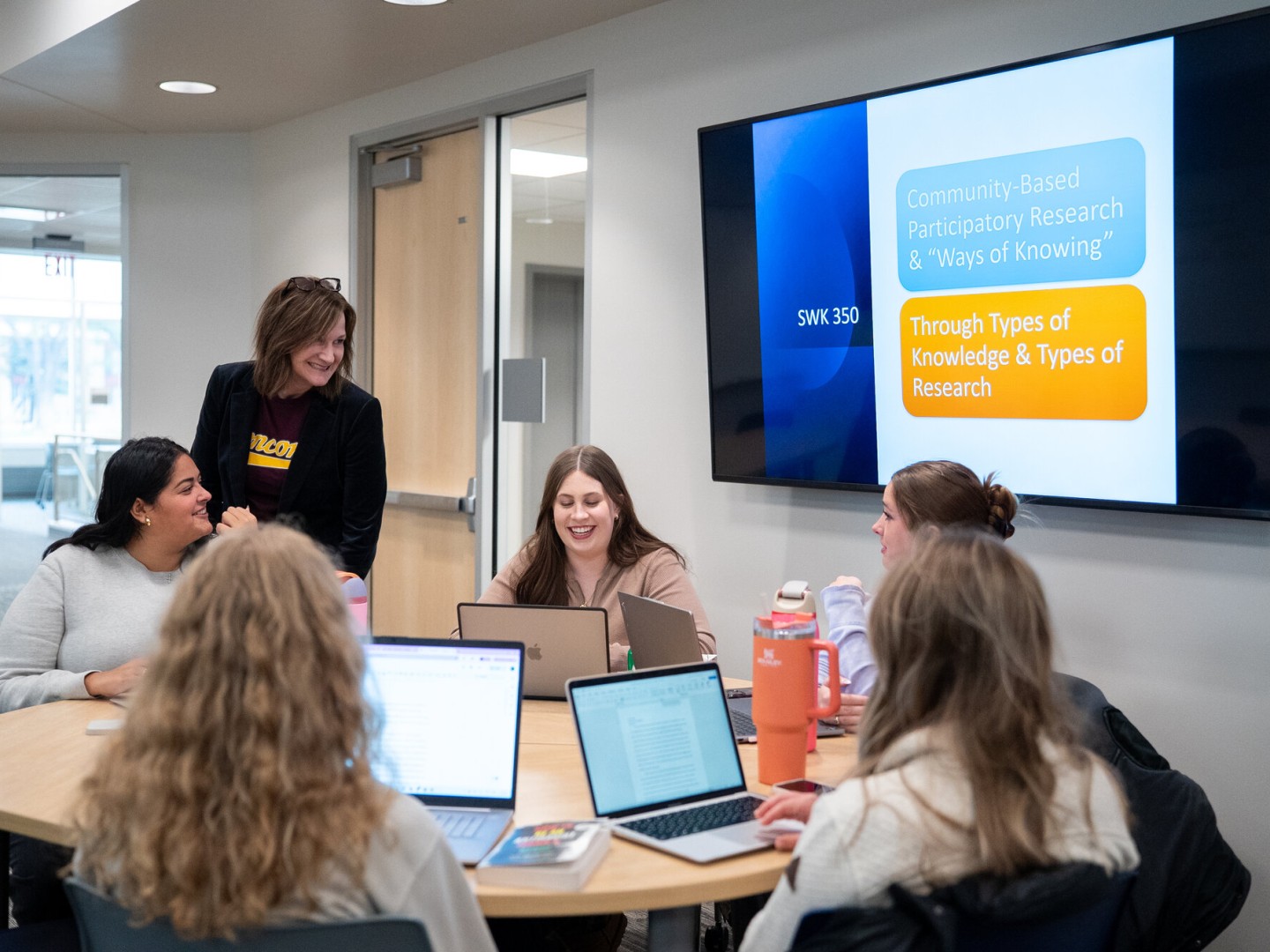
With several new faculty members joining our public health, sociology, social work, and healthcare leadership programs in the past year, this work is just getting underway. My role as director is to support the faculty and programs, but also to help implement curricular changes in our programs to achieve goals for more interdisciplinary collaboration. We seek collaboration not only among the programs in the center, but also with other programs across campus.
As a liberal arts college, the importance of this center is its interdisciplinary collaboration, which brings multiple perspectives to the table to improve population health. We have faculty and students from other health-related fields, from the traditional arts and sciences to business, who are committed and interested in population health. We aim to be a center that serves the whole campus as we prepare future professionals and leaders to seek innovative, data-driven ways to improve the health of people and communities. This is one of the goals of the center, and I am excited to be part of it.
It is not well known that social workers are the nation’s largest providers of mental health services.
What unique opportunities do students have in the social work program? What benefits do they have for hands-on learning in the Heimarck Center?
While we love our time in the classroom with students, we also value social work-related experience outside the classroom, so we have a program expectation that students pursue a minimum number of “contextual learning” hours when they are enrolled in a social work course. Students meet these expectations through part-time employment, volunteer opportunities, or leadership positions. This helps students to build their resume, to identify areas of practice they like and don’t like, and to be competitive in the job market after graduation. In addition to this, each social work student has a full-time internship during their senior year in which they are in the role of a social worker and under the supervision of a social worker. These are amazing experiences for students to gain experience as professional social workers in hospitals, clinics, schools, courts, adoption agencies, disability services, county human service organizations, treatment centers, and other settings.
Our students also benefit from hands-on learning in our new simulation center. The social work program has implemented two new simulations into our social work practice courses, utilizing the support and expertise of the Heimarck simulation center. During one of the simulations, our students interact with standardized client actors in a hospital room setting to practice real-world social work assessments as a medical social worker. During another simulation, the social work program partners with professional social workers from local human services to simulate a real home visit using the Heimarck home health lab. Students love these hands-on learning opportunities, which have already elevated their readiness for the field. We are one of the only social work programs in the area that I know of to utilize simulations in this way. This is due to the team-based collaborative approach we have among faculty and staff in the Sanford Heimarck School of Health Professions that extends simulation learning opportunities beyond its more traditional uses in the health professions.
What do you see in your students and how does that translate beyond graduation?
What I see in students is hope, commitment, and an eagerness to make an impact — and I see this continuing in our alumni after graduation. I am so proud of the ways our social work alumni are making an impact. We have alumni who are working as school social workers, mental health professionals, judges, lawyers, administrators leading statewide systems, child welfare workers, hospice and hospital social workers, supporting immigrants and refugees, working to support the aging population, combating human trafficking and domestic violence, and much more. Social workers walk alongside people, families, and communities when they might be facing their greatest challenges. Problems can be complex and barriers are real, yet I see students drawn to this work because they see strengths, potential, capacity for change, and a commitment to human dignity and respect, which keeps them engaged in hard work.
What recommendations do you have for students thinking about graduate school?
Many of our students pursue graduate school in social work and other fields. My recommendation is for students to do their due diligence on their “why” and how it relates to their personal goals. For some, it may be a good idea to work as a bachelor’s-level social worker and gain experience in the field prior to graduate school. For others, they may have life circumstances and more clarity of personal goals related to graduate study.
I admit to them I am a bit biased as I personally pursued my own graduate degrees after experience in the field. The professional experience I got after and between my degrees was as important to my own professional development. I worked for a couple of years as a bachelor’s-level social worker before pursuing my master’s degree in social work and becoming a clinical social worker. I also taught in a social work program for a couple of years before pursuing my doctorate, and I realized that it fit my needs and style. I tell students that self-reflective work on personal goals and purpose should inform most of our major life decisions.
If you were talking to a prospective student, what would you tell them is a reason to study social work at Concordia?
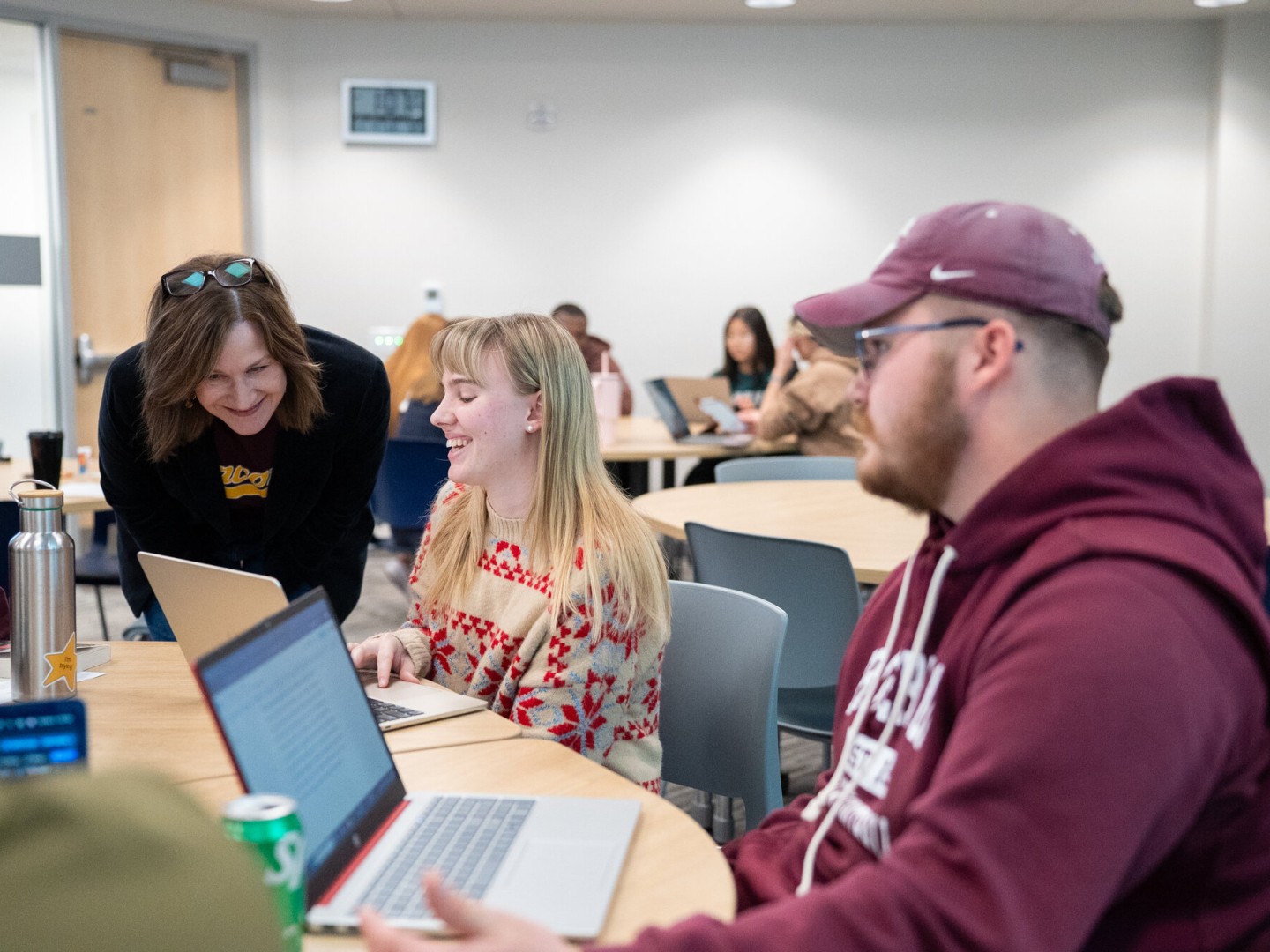
Right now, I would tell them that we are a program “on the grow” with new opportunities in interdisciplinary and simulated learning that are not common in other social work programs. While we are growing in faculty and programs, we still maintain a low student-faculty ratio, which allows us to know our students well and be hands-on in academic and career advising. In addition, students usually move through our major as a cohort, which helps to create a built-in community of peer support and engagement.
Do you have any advice for students considering Concordia?
My biggest piece of advice for students considering Concordia is to visit us and make a plan to spend some time getting to know us. What Concordia offers is hard to put on a brochure or in a sound bite. Once students spend time with us, I think our sense of community and commitment to student care and academic excellence becomes apparent. Some students might not understand how a private liberal arts college can be for them. I personally thought an education like this was out of reach for me when I was in high school. But I benefited from scholarships and faculty mentoring. The truth is that we are financially competitive, we graduate students in four years or less, and we have a diverse student body with students from a variety of backgrounds, geographics, faiths, and other communities. Students are missing out if they don’t give us a look!
Published February 2026